Much has already been written about ChatGPT.
School and college students have been using the Artificial Intelligence (AI) tool to write their essays and homework. Meanwhile, professionals have been using it to draft emails, write CVs and cover letters.
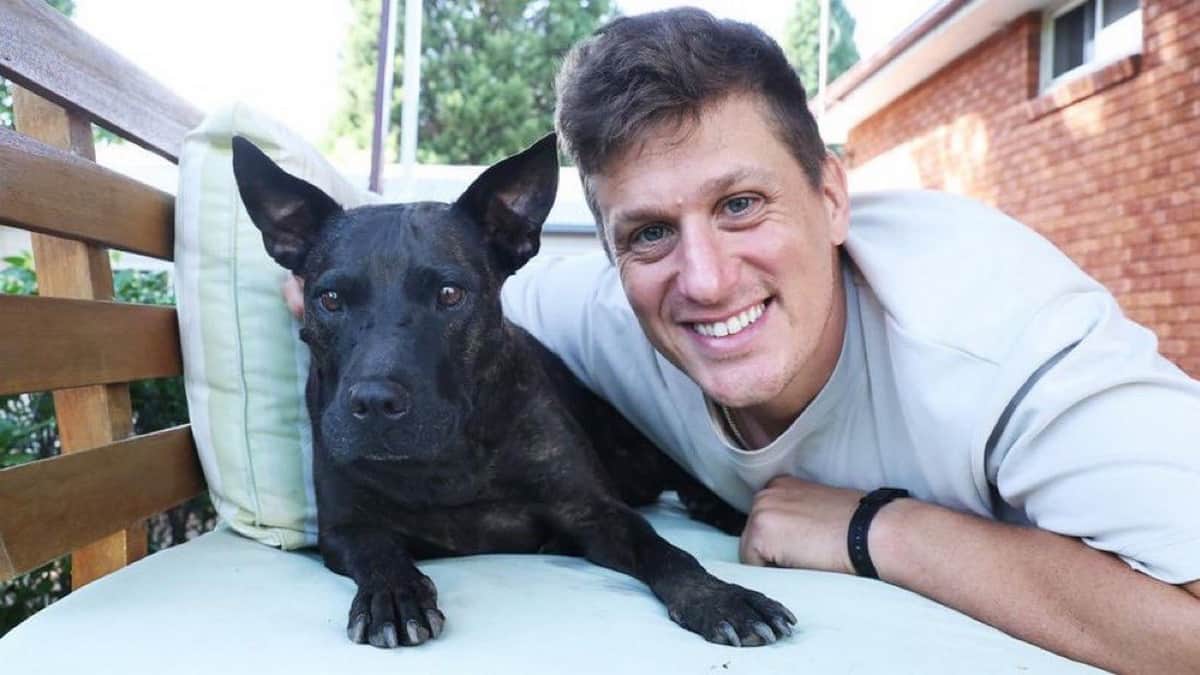
But now one man has claimed that he used the AI software to help develop an experimental treatment for his dog. Paul Conyngham, an Australian tech entrepreneur, has claimed he used both OpenAI’s ChatGPT and Google DeepMind’s AlphaFold while trying to treat his dog Rosie’s cancer.
But what do we know about the case? Can ChatGPT help create vaccines for diseases?
Let’s take a closer look.
What we know about the case
According to reports, Conyngham, who is based in Australia’s Sydney, is the owner of an eight-year-old rescue dog named Rosie. Conyngham had adopted the Staffordshire terrier–Shar Pei dog from an animal shelter in 2019.
In 2024, Rosie was diagnosed with mast cell cancer, an aggressive and common tumour. Conyngham spent thousands of dollars on surgery and chemotherapy for Rosie but a cure remained out of reach. Large tumours appeared on one of Rosie’s back legs, and doctors told Conyngham that Rosie had mere months to live.
However, Conyngham, who had nearly two decades of experience in machine learning and data analysis, wasn’t prepared to give up.
“Rosie is my best mate and, uh, she’s been with me through really tough times, through a breakup, through hard business deals, walks in the forest and, when she was handed this sentence, uh, I felt I had to do my part for her as well,” Conyngham told the Today Show.
Conyngham decided to use AI to try to come up with a cancer treatment for his dog. First, he decided to sequence Rosie’s DNA. Conyngham came up with the treatment plan by using ChatGPT. He told The Australian, “I went to ChatGPT and came up with a plan on how to do this.”
It was ChatGPT that pointed Paul in the direction of the UNSW Ramaciotti Centre for Genomics where he got in touch with Associate Professor Smith. Conyngham paid the scientists $2,116 (Rs. 1,95,000 approx.) to obtain the genomic sequencing of both his dog and the tumours.
He then compared Rosie’s healthy DNA to the DNA of the tumour.
“It’s like having the original engine of your car and then a version of the engine 300,000 km down the road – you can compare them and see where there’s damage,” Conyngham explained.
“We took her tumour, we sequenced the DNA, we converted it from tissue to data and then we used that to sort of search for the problem in her DNA and then develop a treatment based off that,” Conyngham added. “
ChatGPT assisted throughout the entire process.”
Conyngham then employed AlphaFold, an AI system made by Google DeepMind that can help decode protein functions. This allowed Conyngham to identify the mutations and find out which drugs might help target them.
While the AI suggested immunotherapy, Conyngham was denied the use of an immunotherapy drug from a pharmaceutical company. Paul then talked to Smith and the subject of mRNA vaccines arose. Such drugs essentially teach the immune system to attack the cancer cells already in the body.
Conyngham then reached out to Pall Thordarson, director of the UNSW RNA Institute. The Icelandic nanomedicine expert then used Conyngham’s data in order to develop a custom mRNA vaccine for Rosie. Paul provided the data by using AI to analyse gigabytes of genetic data and designing a blueprint that helped guide the development of a custom mRNA vaccine.
Conyngham said the
hardest part was actually getting permission for the drug to be injected into Rosie.
“The red tape was actually harder than the vaccine creation, and I was trying to get Australian ethics approval to run a drug trial on Rosie. It took me three months, putting two hours aside every single night just typing up this 100-page document. But there was a second intervention of fate,” Conyngham was quoted as saying by The Australian.
The custom mRNA vaccine was then administered to Rosie over Christmas. According to Conyngham, a tennis ball-sized tumour has since shrunk by about half, a result that has surprised researchers.
Can ChatGPT help create vaccines for diseases?
It is possible.
Artificial intelligence is beginning to have a growing impact on vaccine research. In fact, researchers at the Massachusetts Institute of Technology have demonstrated how AI models can help design the lipid nanoparticles used to deliver RNA vaccines, potentially accelerating the development of new treatments.
“What we did was apply machine-learning tools to help accelerate the identification of optimal ingredient mixtures in lipid nanoparticles to help target a different cell type or help incorporate different materials, much faster than previously was possible,” Giovanni Traverso, an associate professor of mechanical engineering at MIT, a gastroenterologist at Brigham and Women’s Hospital, and the senior author of the study.
“Most AI models in drug discovery focus on optimising a single compound at a time, but that approach doesn’t work for lipid nanoparticles, which are made of multiple interacting components,” Alvin Chan, a former MIT postdoc who is now an assistant professor at Nanyang Technological University, told MIT.
“To tackle this, we developed a new model called COMET, inspired by the same transformer architecture that powers large language models like ChatGPT. Just as those models understand how words combine to form meaning, COMET learns how different chemical components come together in a nanoparticle to influence its properties — like how well it can deliver RNA into cells.”
They’re not alone.
Researchers at the Islamic Azad University, Iran, examined the “pivotal role” that AI played around the world in response to the Covid-19 pandemic.
“AI’s ability to integrate computational speed with biological complexity redefined the boundaries of what is possible in global health responses, signalling a new era of AI-driven therapeutic development for future crises,” the authors were quoted as saying by Gavi.org. The researchers discovered using AI improved the accuracy of trials and made sure that they “reflected the diverse populations most affected by the pandemic”.
Experts say such advances suggest AI could become a powerful tool in the future of personalised medicine. However, Conyngham is aware of the present limits of such treatment.
“I’m under no illusion that this is a cure, but I do believe this treatment has bought Rosie significantly more time and quality of life,” Conyngham was quoted as saying by The Australian.
With inputs from agencies
End of Article