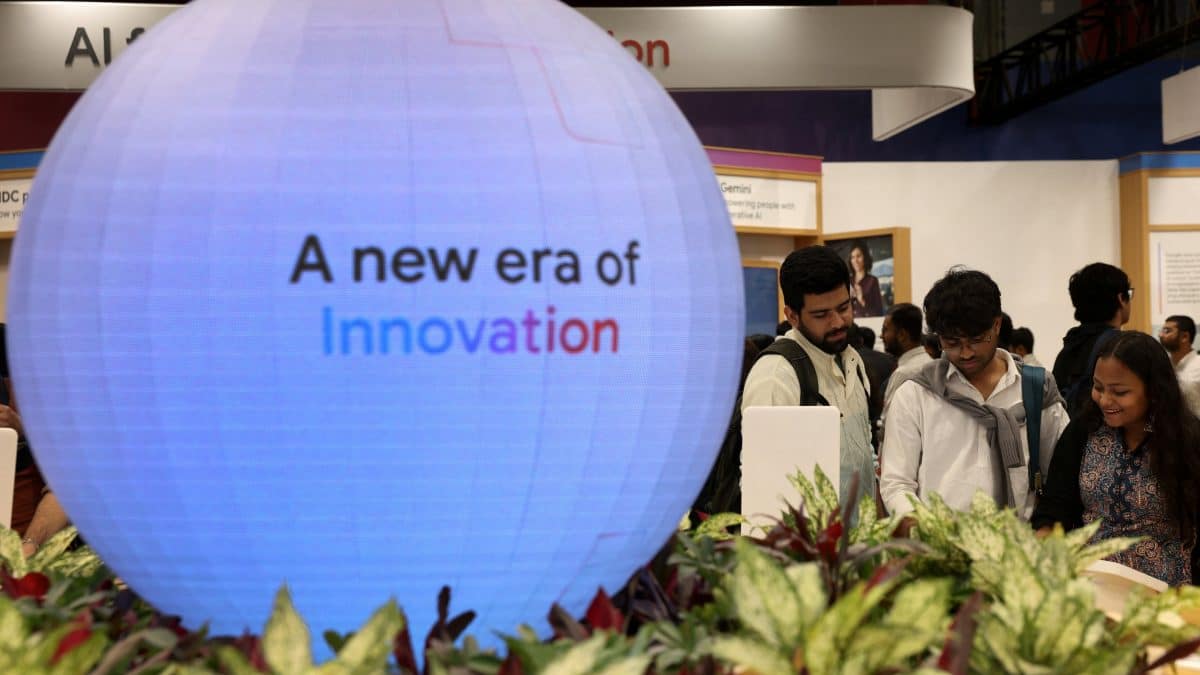
At the India AI Impact Summit, Raoul Nanavati, Founder & CEO of Navana.ai, tells Firstpost why India is at an AI inflection point. From multilingual voice infrastructure and sovereign data to job disruption and bias in Western-trained models, Nanavati argues this is a defining decade for Indian AI startups—provided the country invests in reskilling and indigenous datasets
At the India AI Impact Summit, Raoul Nanavati, Founder & CEO of Navana.ai, spoke to Firstpost’s Dheeraj Kumar about voice AI infrastructure, multilingual inclusion, job disruption, data localisation and why India presents a once-in-a-decade opportunity for AI startups.
Edited excerpts:
How do you see India’s startup ecosystem evolving in AI compared with markets like the US or China?
We are at a very interesting inflection point in India’s startup journey. With AI and the growing inclusion of Indian languages in technology, there is a massive opportunity for startups to build for the domestic market at scale.
We are moving from traditional software services to AI-driven outcomes. That shift changes the value equation entirely. The Indian market itself is large enough to sustain and scale AI-first companies without immediately looking outward.
In terms of talent depth, funding availability and ecosystem vibrancy, India is in a strong position. The government has also taken several steps to ease innovation and support digital infrastructure.
So yes, I genuinely believe this is a phenomenal time to be a founder in India—building for India.
Do you believe AI will significantly alter India’s job market? Which sectors could see the biggest shift?
This is not just an India-specific question—it is a global one. AI is set to transform the job market in a profound way across geographies, including India.
I don’t believe many sectors will remain untouched. From customer service and call centre operations to white-collar roles such as designers, developers and analysts, job profiles are going to evolve dramatically. The nature of work itself will change—how tasks are performed, what skills are required, and how value is delivered.
We are heading towards a structural shift rather than incremental change. That means governments, companies and institutions must proactively prepare for it.
The key challenge is not whether change will happen—it will. The real question is whether we can manage that transition responsibly by upskilling workers and equipping them for the next generation of roles that AI will create.
Many companies are reducing headcount after deploying AI. Employment generation in AI does not always match the pace of automation. How do you view this?
This requires an external off-ramp—meaning policy-level thinking.
From a national perspective, we need structured reskilling programmes and regulatory foresight. While innovation is accelerating rapidly, the conversation around workforce transition is not progressing at the same speed.
The change is inevitable. The preparedness must catch up.
What should companies and governments do to ensure AI remains fair, transparent and free from bias?
It fundamentally comes down to the datasets we build and train our systems on.
A large portion of the AI tools currently in use have been developed in the West, using Western datasets. If India wants AI systems that are fair, representative and contextually accurate, we must invest heavily in building indigenous datasets that reflect our linguistic, cultural and socio-economic diversity.
There are strong initiatives underway—such as Bhashini, AI4Bharat, academic institutions like IISc Bengaluru, and research teams including Microsoft Research—all contributing to Indian-language and region-specific AI capabilities.
However, when you compare current efforts to the scale and diversity of India, it is still a drop in the ocean. Ensuring fairness and transparency in AI will require sustained, large-scale investment in high-quality, representative data. Without that foundation, bias is inevitable.
End of Article