Published on: Nov 27, 2025 01:41 pm IST
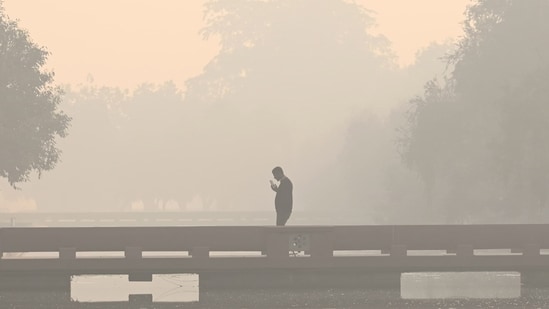
Delhi’s pollution levels have remained consistently hazardous through November 2025
As air quality in Delhi NCR plunges deep into the severe zone, the United States Embassy has revealed an interesting detail about how it is battling the toxic winter smog. Instead of using popular consumer brands like Dyson, Philips, or Coway, the embassy relies on large-room Blueair purifiers and has now floated a major tender to restock the filters needed to keep them running round the clock.
The embassy has issued a solicitation to procure 1,200 boxes of True HEPA Particle Filters for Blueair’s 500 and 600 Series machines. These models are part of Blueair’s older but extremely powerful lineup, used globally in offices and government buildings that require high-volume air purification. The tender specifically mentions compatibility with the Blueair 503, one of the most widely deployed heavy duty units from the brand.
Delhi’s pollution levels have remained consistently hazardous through November 2025, forcing institutions across the city to intensify indoor air safety measures. The embassy’s requirement for such a large number of replacement filters indicates the scale of its purifier network. Since each Blueair 500 or 600 Series machine uses a set of three filters per change, an order of 1,200 boxes points to several hundred units operating across embassy offices, residential compounds, staff areas, and consular buildings.
The solicitation document, issued on 18 November 2025, seeks competitive proposals for the filters and sets the deadline for bids as 30 November 2025. It lists the requirement as “True HEPA Particle Filter (Set of 3) 500 and 600 Series for Blueair Purifier Model 503 BLF-500PA.” These filters are designed to trap fine particulate matter that dominates Delhi’s winter pollution.
The embassy has been one of the earliest large scale adopters of air purifiers in the capital. The scale of its deployment first became widely known in 2015 when more than 1,800 units were procured ahead of former US President Barack Obama’s visit for India’s Republic Day celebrations.
With pollution levels now frequently breaching AQI 400, filter replacement cycles have become much shorter than usual. HEPA filters in extreme smog conditions can clog rapidly, forcing institutions to replace them far more often. The embassy’s fresh procurement highlights how foreign missions, corporates, schools, and hospitals are adapting to Delhi’s worsening winter air, even as long term pollution control solutions continue to lag behind.