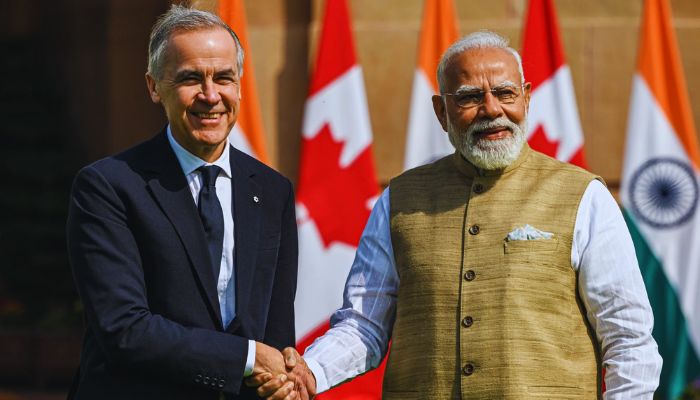
Under Prime Minister Mark Carney, Canada appears to be more eager than ever to salvage ties with India, undoing the profound damage his predecessor, Justin Trudeau, inflicted through years of diplomatic blunders motivated by domestic Khalistani appeasement politics. With a change in leadership, there has been an evident shift in the Canadian approach towards India. On his maiden bilateral visit to India, PM Carney met Prime Minister Narendra Modi, and proclaimed that India and Canada are entering “a new era of partnership.”
India and Canada are entering a new era of partnership 🇨🇦🇮🇳 pic.twitter.com/DSAz24TfIc
— Mark Carney (@MarkJCarney) March 2, 2026
During the India–Canada CEOs Forum in Mumbai on Monday, PM Modi announced that India and Canada have entered a long-term nuclear deal.
Marking a significant and pragmatic departure from Trudeau-era distrust and diplomatic bitterness, Canada and India are now strengthening cooperation in various sectors, particularly space, technology, energy, and critical minerals. PM Carney’s India visit is centrally aimed at expediting a Comprehensive Economic Partnership Agreement (CEPA) with India. This agreement would be aimed at doubling two-way trade, increasing trade to $50bn by 2030.
Change in leadership, change in rhetoric? Canadian PM acknowledges that “natural partner” India is not a “middle power”
The Canadian Prime Minister’s recent speeches and statements during his four-day visit reflect a pivot in Ottawa’s foreign policy from levelling preposterous allegations of transnational repression to buttering up the economic giant that is India. In an interview with News18 on 1st March, PM Carney acknowledged that India is “not a middle power” but a nation on an entirely different trajectory of global influence and economic dynamism.
When asked if ‘middle powers’ like India and Canada are resetting ties, PM Carney said that while he is content with Canada being called a middle power, India cannot be called that. Earlier, PM Carney had hailed India as a “natural partner”.
“Not to be too picky about the rhetoric, but I wouldn’t call India a ‘middle power’. I’m happy for Canada to be called a middle power. But India’s trajectory and ambition is totally different,” the Canadian PM said.
Journalist: Are “middle powers” like India and Canada resetting ties as part of a global resistance?
Canadian PM Carney: I wouldn’t call India a middle power. I’m happy for Canada to be called a middle power. But India’s trajectory and ambition is totally different. pic.twitter.com/AIRcDwOpZ8
— Shashank Mattoo (@MattooShashank) March 1, 2026
Reappointment of High Commissioners, appointment of liaison officers, changing rhetoric about India’s so-called ‘transnational repression on Canadian soil’ to more: Carney government’s consistent steps salvage a ruined India-Canada bilateral relationship
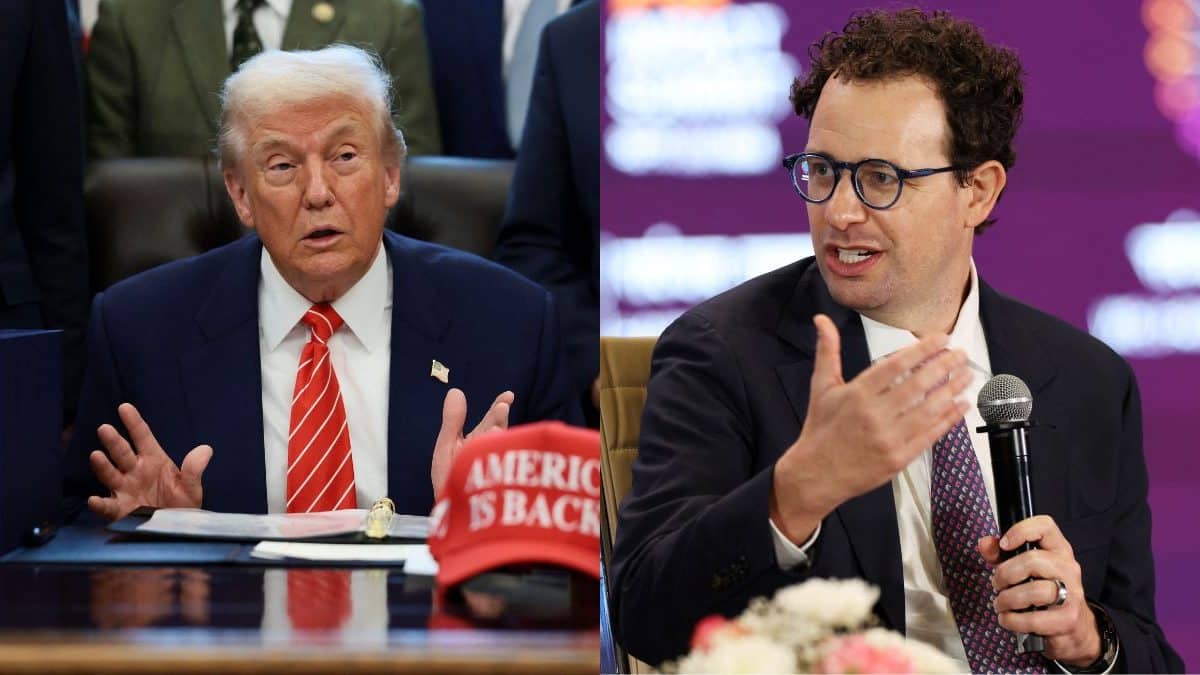
Clearly, Canada has learned the hard way that India is not the country it would want to antagonise for domestic appeasement politics. Carney’s rhetoric and actions indicate that Canada is now prioritising unlocking the full potential of India-Canada relations, especially at a time when Ottawa is seeking to diversify away from an unpredictable United States under renewed tariff pressures and constant ‘51st state’ mockery by President Donald Trump.
After assuming office in 2025, Carney has made gradual but consistent efforts to salvage the India-Canada bilateral relations that had been left in tatters since the 2023 diplomatic rupture over the killing of Khalistani terrorist Hardeep Singh Nijjar. India had strongly rejected the allegations, but the fallout led to the tit-for-tat expulsion of diplomats, a suspension of trade talks, and eventually the withdrawal of high commissioners.
However, in August 2025, India and Canada announced the appointment of new high commissioners to each other’s capitals. Since Canada initiated hostilities at the government and diplomatic level, it was for Canada only to take the first step towards mending ties with India. With Trudeau out and Carney in, the new Canadian Prime Minister did not waste time and invited PM Modi to the G-7 Summit.
PM Modi decided not to carry forward any grudges and attended the summit. The shift in India-Canada relations began take shape from hereon, with both countries agreeing to reappoint high commissioners.
In February this year, India and Canada agreed that each country would establish dedicated security and law-enforcement liaison officers on each other’s soil. The decision was announced following high-level talks during the visit of India’s National Security Advisor (NSA) Ajit Doval to Ottawa on February 6–7, 2026. Doval held meetings with Canada’s National Security and Intelligence Advisor and Deputy Clerk to the Privy Council, Nathalie G. Drouin, as well as Minister of Public Safety Gary Anandasangaree.
According to official statements from both governments, the two sides agreed to a shared workplan to guide cooperation on national security and law enforcement. A central element of this plan is the mutual posting of liaison officers. “During the meeting, it was agreed that each country would establish security and law-enforcement liaison officers and that their respective agencies would build on working relationships,” the statement said.
These officers would work as dedicated points of contact, facilitating faster and more direct coordination between Indian and Canadian security agencies on counter-terrorism, organised crime, and other transnational threats.
Before the first bilateral visit by a Canadian Prime Minister to India since 2018, the Carney government officially stated that India is no longer involved in violence, extortion, or transnational repression on Canadian soil.
Ottawa said that it is confident that India is no longer linked to violent crimes in Canada and points to renewed security dialogue and cooperation between the two sides. Despite Trudeau himself admitting that there was no evidentiary proof of India’s involvement in Nijjar’s killing, the Canadian government’s recent “India no longer linked to violent crimes in Canada” statement indicated a pragmatic recognition that managing security concerns and rebuilding diplomatic and economic ties do not have to be mutually exclusive. It would have been understandably embarrassing for Canada to hand an outright vindication to the Indian side, given that there has only been a change in Prime Minister and not the elected liberal government.
These steps taken by Canada have indicated a significant de-escalation that clears the air for deeper cooperation in critical sectors, including nuclear energy. Canada’s shift in approach and the flattery have yielded results, as on 2nd March, India and Canada signed a $1.9 billion Uranium deal.
The Canadian Liberal government’s shift in tone is still facing pushback from anti-India Liberal MPs and Khalistani extremists. However, the political reconfiguration following the 2025 federal election has played a key role in the gradual but mutually beneficial India-Canada relations reset.
Khalistani Jagmeet Singh’s NDP lost 17 of their 24 seats to Liberal and Conservative candidates. Singh enjoyed immense influence in the Trudeau government and constantly peddled the Khalistani narrative. However, Singh lost his own seat in the elections last year and had to step down as NDP chief. NDP’s drubbing resulted in the political arm of the anti-India Khalistani cabal losing its outsized influence in the Trudeau minority for years as it no longer held leverage within the governing coalition.
Although the Khalistani menace cannot be destroyed within a year or two, Canada appears to understand that territorial integrity is India’s red line finally, and Ottawa’s tolerance of those who intend to violate that redline will only cause a rift with India. While the Carney government may have not taken any dramatic measures to discontinue Canada’s decades-old practice of harbouring Khalistani terrorists, in fact, it too, tolerates anti-India ‘protests’ by Khalistanis in the name of ‘free speech’, a reduced domestic pressure, offers a conducive environment to (re)build strong ties with the emerging superpower and economic powerhouse – India.