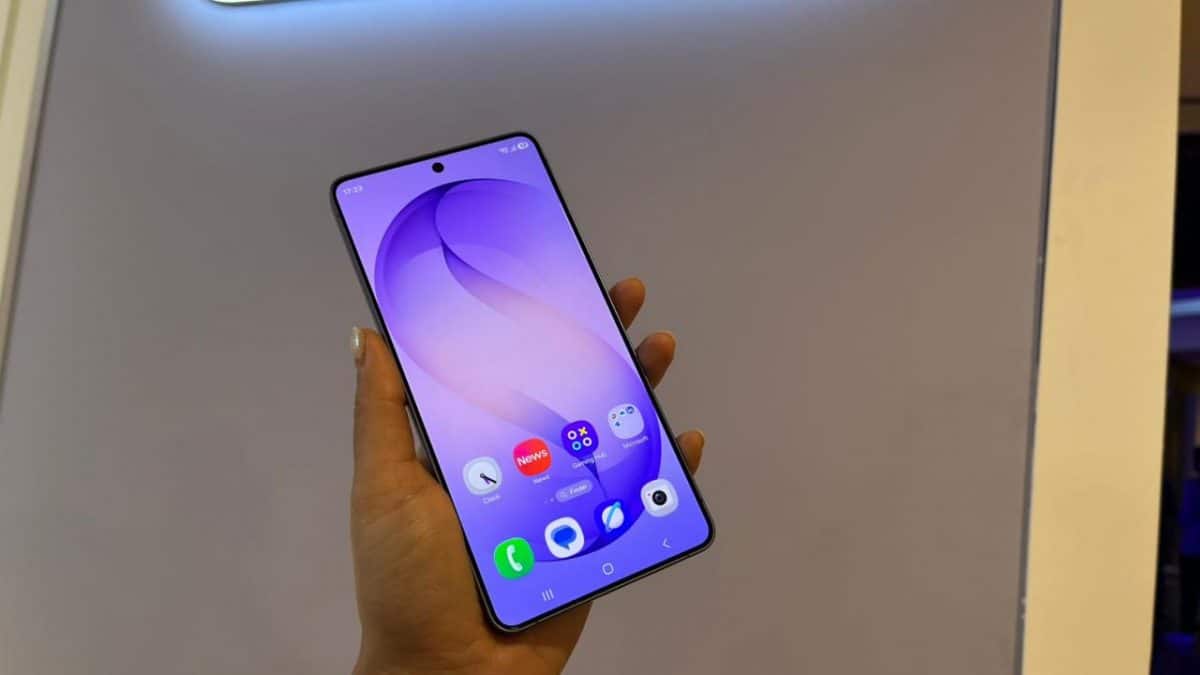
Among all the Artificial Intelligence features that landed with the new Galaxy S26 Ultra in India, its Privacy Display stands out not just for innovation but for practicality, a genuinely useful feature rather than a marketing talking point.
The Samsung Galaxy S26 Ultra has finally arrived in India, bringing with it a host of AI-powered upgrades and one standout innovation: the Privacy Display.
While much of the buzz around
Samsung’s 2026 flagship has focused on its intelligent camera and
on-device AI features, it’s this new display technology that feels genuinely transformative.
During the launch, I had the chance to see the Privacy Display in action, and it immediately became clear that this isn’t another flashy gimmick. It’s a practical, thoughtfully engineered solution to a problem every smartphone user faces, keeping personal information safe from prying eyes in public spaces.
Before I give you the verdict, let’s take a look at the science behind it.
Samsung Galaxy S26 Ultra’s Privacy Display: How does it work
As mobile experiences become more personalised with the rise of AI, privacy protection has become more crucial than ever, especially when using devices in shared or public environments.
The world’s first #PrivacyDisplay on mobile. https://t.co/mstdGmM0RI.
Meet your built-in privacy screen, only on #GalaxyS26Ultra. Privacy Display will allow you to protect your private information by hiding your full screen from other people’s view. Or, you can choose what you… pic.twitter.com/YSGFkHiY8G
— Samsung India (@SamsungIndia) February 26, 2026
Samsung has approached this challenge at the hardware level, building privacy directly into the Galaxy S26 Ultra’s display.
Samsung’s Privacy Display works at the pixel level. Using a new OLED layer that controls light dispersion, it blocks side-angle visibility while keeping the screen perfectly clear for the primary user. Samsung calls it a hardware–software fusion, the first of its kind in a smartphone.
This means you can use your phone normally, and the display dynamically adjusts when privacy mode is activated. Whether you’re entering your banking PIN, reading sensitive emails, or using secure apps, the display restricts what others can see without sacrificing brightness or colour quality.
The feature also allows customisation. You can set it to automatically activate during specific actions, like entering passwords or unlocking payment apps, or manually switch it on for certain apps. The Partial Screen Privacy mode hides pop-up notifications, while Maximum Privacy Protection completely blocks side views, even when switching between portrait and landscape modes.
How Privacy Display beats traditional screen guards
Anyone who’s used a stick-on privacy screen knows the downsides, duller colours, reduced brightness, and faster battery drain because you’re forced to crank up the display. The Galaxy S26 Ultra’s Privacy Display eliminates all of that.
Because the feature is built into the hardware, the phone maintains its vivid display quality at all times. You can choose when to enable privacy, say, while entering your PIN on a crowded train or using your banking app in a café, and turn it off when showing something to a friend. Unlike a static guard, this technology adapts to your needs.
Samsung’s software integration also means the feature feels seamless. It can be toggled quickly through the control panel or even automated through One UI’s smart routines. There’s no extra glare, no reduced clarity, and no reason to compromise between visibility and discretion.
Verdict
Having seen the Privacy Display in action, I can safely say this is not a gimmick, it’s a feature that really makes a difference. In an age where our smartphones are extensions of our personal and professional lives, privacy should be built into the device itself, not added as an afterthought.
The Galaxy S26 Ultra’s Privacy Display delivers exactly that. It solves a real-world problems, such as, shoulder surfing and screen snooping, with an elegant blend of hardware precision and software control. It’s smart, intuitive, and incredibly practical.
If there’s one feature I expect other brands to imitate soon, it’s this one. Samsung may have just set a new standard for smartphone privacy, proving that innovation doesn’t always mean more pixels or higher megapixels, sometimes, it’s simply about keeping your screen truly yours. We will experiment with this feature even more, once we get the device in out hands.
End of Article