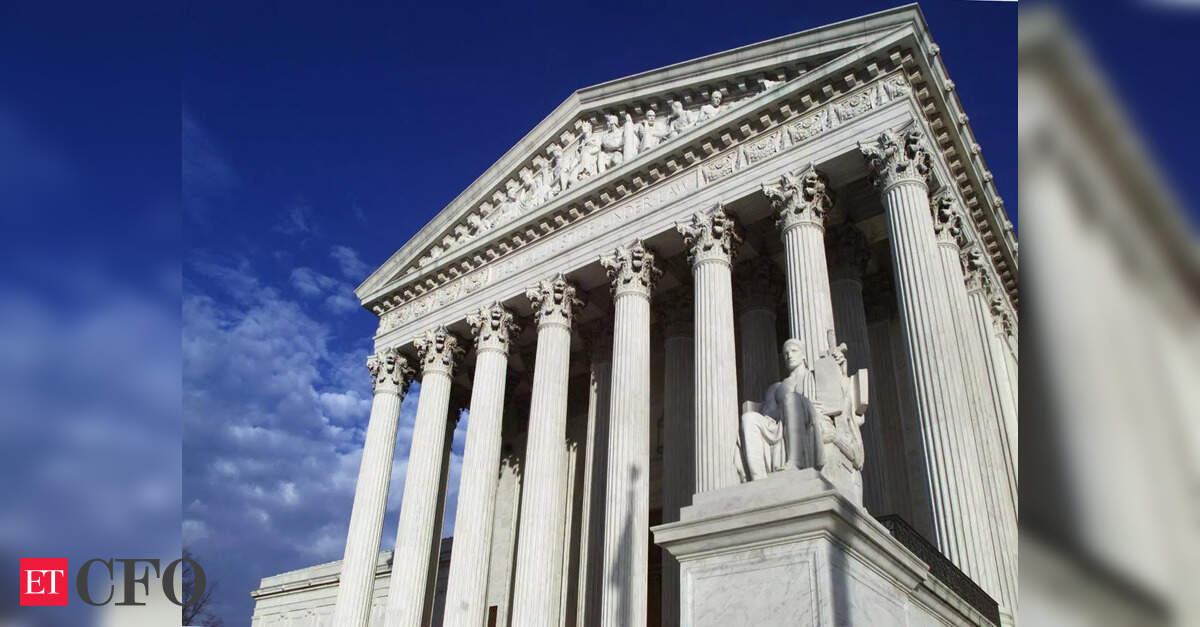
The US Supreme Court on Friday delivered a significant blow to President Donald Trump’s economic policies, invalidating most of his sweeping tariff measures. The court ruled that the President lacked the authority under the 1977 International Emergency Economic Powers Act (IEEPA) to impose extensive import duties on goods from nearly all US trading partners. This decision is anticipated to have wide-ranging consequences for global trade, businesses, consumers, inflation, and household finances.
This verdict represents a notable shift from recent Supreme Court decisions that had largely favored the Trump administration. In the past year, the justices had sided with the administration in interim orders, permitting policies such as a ban on transgender troops and granting the United States DOGE Service access to sensitive data. Significant cuts to the Education Department were also enabled while legal challenges were ongoing.
The financial implications of this ruling are substantial. The tariffs in question affected trillions of dollars in trade. The US government had collected nearly USD 134 billion in levies through December 14 under the contested authority.
Estimates by the Tax Foundation suggest that Trump’s trade war will cost American households approximately USD 1,100 each in 2025.
This judgment comes just days after the United States and India announced a framework for an Interim Agreement concerning reciprocal and mutually beneficial trade. This framework reaffirmed the countries’ commitment to the broader U.S.-India Bilateral Trade Agreement (BTA) negotiations. These negotiations were launched by President Donald Trump and Prime Minister Narendra Modi on February 13, 2025. The BTA aims to include additional market access commitments and support more resilient supply chains.
A Joint Statement highlighted the significance of the Interim Agreement between the United States and India.
“The Interim Agreement between the United States and India will represent a historic milestone in our countries’ partnership, demonstrating a common commitment to reciprocal and balanced trade based on mutual interests and concrete outcomes.”
Under the joint statement, India will eliminate or reduce tariffs on all U.S. industrial goods. This includes a wide range of U.S. food and agricultural products. These products include dried distillers’ grains (DDGs), red sorghum for animal feed, tree nuts, fresh and processed fruit, soybean oil, wine and spirits, and additional items.
The United States will implement a reciprocal tariff rate of 18 percent. This will be applied under Executive Order 14257 of April 2, 2025, as amended. The tariff applies to originating goods of India. These include textile and apparel, leather and footwear, plastic and rubber, organic chemicals, home decor, artisanal products, and certain machinery.
Subject to the successful conclusion of the Interim Agreement, the US will remove the reciprocal tariff on a wide range of goods. These goods are identified in the Potential Tariff Adjustments for Aligned Partners Annex to Executive Order 14346 of September 5, 2025, as amended. This list includes generic pharmaceuticals, gems and diamonds, and aircraft parts. The US had previously imposed a 50 percent tariff on Indian goods. This included a 25 percent tariff for importing oil from Russia.